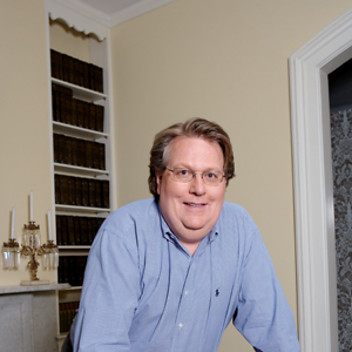
Jason Clay
Senior Vice President, Market Transformation, World Wildlife Fund at World Wildlife Fund—SVP, Markets
FollowAbout Jason
I am a…
Activist, Change agent, Educator/Teacher, Environmentalist, Idea generator, Marketer, Social entrepreneur, World traveler, Writer/Editor
Bio
Human Rights—Giving a Voice to Those Who Aren’t Heard, 1974 onward
• First demonstrated the link between ethnicity and conflict over natural resources. Developed a database of 6,500 peoples and their territories to predict resource wars with states
• Proved that reliable research could be undertaken talking to refugees in camps
• Suggested the views of “victims” (e.g. indigenous people, refugees, or famine victims), are no less credible than those of others (e.g. officials, researchers, NGOs or journalists).
• Documented the misuse of famine assistance.
• Founded and edited-award winning Cultural Survival Quarterly, 1980-1992.
Rainforest Marketing—Proving the Value of Rainforests—1988 onward
• Established a trading company for rainforest products within an NGO
• Created the first ecolabel in the US
• Created Rainforest Crunch with Ben and Jerry’s and products with >50 other companies
• Generated 1,500 press clips over 4 years for rainforest conservation and marketing
• Harvard Business School Rainforest Crunch case is required reading in business schools
Commodities—Reducing the Impact of Producing Food and Fiber—1990s onward
• World Agriculture and the Environment (2004) identified the key impacts of producing the 21 most significant agricultural commodities and the 13 most important aquaculture species.
• World Aquaculture and the Environment (forthcoming, 2009) identified the key impacts of producing 15 aquaculture species for seafood
• Identified the 25 most significant minerals in the 21st Century for an upcoming book (2010).
• Convened 8 global commodity roundtables (10-20% of producers and buyers at each) to agree key impacts, establish baselines, and draft performance-based standards.
Supply Chain Management—2000 onward
• Help companies improve supply chain management and the quality of the products they purchase, reduce their impacts, and improve their “license to operate” and access to markets
• Created concept of ‘carbon neutral food” by including payments for carbon sequestered in tree crops and sugarcane harvested without burning.
• Advise Coca-Cola about carbon opportunities in product sourcing as part of a strategy to reduce carbon footprint
• Worked with Tabasco and Cadbury-Schweppes to purchase ingredients from landless producers and use forward contracting to help them obtain loans without collateral
• Advise Mars on sourcing strategies for raw materials
Corporate Responsibility
• Worked with Unilever to document the impact of its business in Indonesia
• Designed follow up research on five other sectors (e.g. oil and gas, mining, banking, export manufacturing, and food).
• Launched the first investment fund to help small-scale producers and workers buy equity (e.g. ESOPs or joint ventures) in agricultural processing operations
• Evaluated 15 different worker-owned and equity operations in Brazilian agriculture to identify models to guide the World Bank’s forestry investments in Brazil.
Leveraged Funding
• Work supported by >60 foundations
• >$2 billion for Ethiopian famine victims and refugees
• >$1 billion for community development, value added production and asset creation
• Rainforest conservation
• Performance-based indicators and standards for 12 commodities
• Advised key US foundations (e.g. Ford, MacArthur, Moore, Packard, Pew)
Changed Policies
• US policy toward Uganda, Ethiopia, Sudan, Mozambique and Guatemala regarding refugees and famine victims
• INS regarding ethnic persecution and refugees
• Drafted World Bank Tribal People Policy for Africa
• Introduced performance based indicators into ecolabels and standards
Changed the Way We Think
• Ethnicity and refugees
• Creating value/assets
• Performance-based standards, results and innovation rather than practices
• Aquaculture trends and impacts
• Agriculture impacts
• Mining impacts
• Bundled values
• Poverty alleviation and Multi-national companies
Changed WWF
• Created the Market Transformation Initiative to change the way the WWF Network engages with the private sector
• Created a global agriculture program with 100 staff to reduce its key impacts
• Developed standards for aquaculture—before it was the largest human source of seafood
Developed an internal R&D function to identify and anticipate global trends
I'm passionate about
Creating solutions, bundling values, finding incentives for change, connecting the dots, understanding commodities, visualizing the possible, dispelling myths, giving voice to those who have none.
An idea worth spreading
An idea worth spreading—1000 characters
Bundled Values—Commodities and Environmental Services
Those that benefit most from environmental services (sequestered carbon, watersheds, etc.) will pay more for them. In agriculture, both farmers and brands benefit. Farmers from reduced costs. Brands from enhanced reputations, access to markets, and license to operate. The question is can such benefits be linked through commodity trading systems?
Bundling values within commodities began in Chicago in the 1850s. Voluntary systems allowed agricultural commodities to be substituted regardless of where they were produced. Eventually, standards came to address weight, humidity, foreign matter, and “brokens.” As science progressed, limits for coliform, e-coli, salmonella, and aflatoxin were added. Commodity trading systems were created by the private sector. Once established, however, governments developed regulations to reinforce the rules 20-40 years later. For example, the US defined the
Areas of expertise
Agriculture, Aquaculture, Business Strategies, Corporate Partnerships, Ecolabels, standards and certification, Human rights—indigenous people, refugees and famines victi, Marketer, product development, Trend spotting/analysis, Value chain analysis
The TED story
Unveiling the Obvious—How the World Connects
People don't know I'm good at
Listening, cooking anything, connecting the dots, generating passion for ideas and change, connecting global to local, imagining and building the future