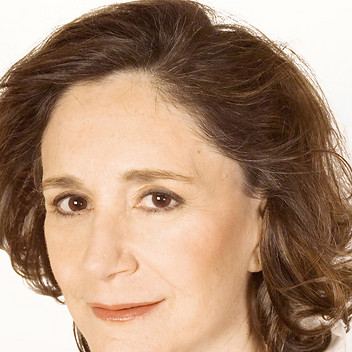
About Sherry
I am a…
Activist, Brainstormer, Business adviser, Business mentor, Change agent, Educator/Teacher, Idea generator, Jewish, Parent, Single, Writer/Editor
Bio
Sherry Turkle is a professor, author, consultant, researcher, and licensed clinical psychologist who studies the psychology of people’s relationships with technology, especially digital technology. She is the Abby Rockefeller Mauzé Professor of the Social Studies of Science and Technology in the Program in Science, Technology, and Society at MIT, and founding director of the MIT Initiative on Technology and Self.
Turkle has investigated the intersection of digital technology and human relationships from the early days of personal computers, showing how technology doesn’t just catalyze changes in what we do – it affects how we think. Her studies explore how the Internet emerged as a context for self-exploration and social encounters. Combined with other 21st Century technologies like psychopharmacology, robotics, nanotechnology, genetic engineering, biotechnology and artificial intelligence, it raises fundamental questions about selfhood, identity, community, and what it means to be human.
Turkle demonstrates that we are quick to substitute digital connection for face-to-face conversation. She asks if this leaves us more alone or more together. Turkle’s finding of a “flight from conversation” also raises critical questions about technology’s role in business productivity, asking whether multi-tasking actually leads to deteriorating performance in each of our tasks. How does our always-connected state affect our ability to think, create, and innovate?
Turkle received a joint doctorate in sociology and personality psychology from Harvard University and is a licensed clinical psychologist. She is the author of six books, including Psychoanalytic Politics: Jacques Lacan and Freud’s French Revolution; The Second Self: Computers and the Human Spirit; Life on the Screen: Identity in the Age of the Internet; Simulation and its Discontents; Alone Together: Why We Expect More From Technology and Less From Each Other, and most recently, the New York Times bestseller, Reclaiming Conversation: The Power of Talk in a Digital Age. Turkle is also the editor of three other works: Evocative Objects: Things We Think With; Falling For Science: Objects in Mind; and The Inner History of Devices.
She has been profiled in The New York Times, Scientific American, and Wired. She was named "woman of the year" by Ms. Magazine and among the "Forty under Forty" who are changing the nation by Esquire. Among other honors, Turkle was a Fellow of the World Economic Forum, a recipient of a Harvard Centennial Medal, A Fellow of the Academy of the American Arts and Sciences, and a recipient of the Guggenheim and the Rockefeller Foundation Humanities Fellowships.
Turkle is a featured media commentator on the social and psychological effects of technology, including appearances on programs as Nightline, Frontline, The CBS Morning News, The Today Show, The Colbert Report, and 20/20.
I'm passionate about
The quality of human conversation and connection. How technology can enhance this.
An idea worth spreading
The idea that we think that constant connection will make us less lonely, but really we are at risk. It is really the reverse. If we don't know how to be alone, we will only be lonely. If we don't teach our children to alone, they will only know how to be lonely. How do you get from connection to isolation? You get to isolation if you don't develop the capacity for solitude. Solitude is where we find ourselves so that we can reach out to others and form reach attachments. If we don't develop the capacity for solitude, we turn to other people to feel less anxious or more alive. We tend not to see them for who they are. It is as if we are using them as spare parts to support our fragile self. We need to make room for solitude in our life and we need to mark the difference between connection (of which we have plenty) and conversation (of which we don't have nearly enough).
People don't know I'm good at
interior design and architecture . . . these are passions!