About Dr. Elizabeth
I am a…
Change agent, Explorer, Filmmaker, Global soul, Life mentor, Philanthropist, Social entrepreneur, World traveler
Bio
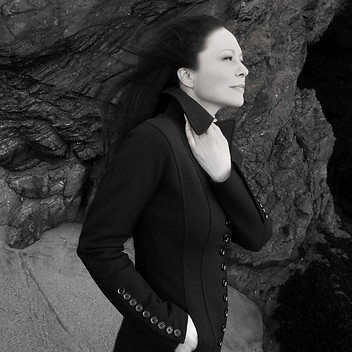
Dr. Elizabeth Kapuʻuwailani Lindsey is the first Polynesian Explorer and female Fellow in the history of the National Geographic Society. She descends from Hawaiian navigator-chiefs and from a European lineage of sea captains. A cultural anthropologist and a doctoral scholar in ethnonavigation, she was mentored for nearly a decade by Grandmaster Navigator Pius "Mau" Piailug of Satawal, Micronesia, widely regarded as the greatest non-instrument navigator of the 20th century.
Dr. Lindsey applies wayfinding, the science of finding position and direction without instruments, to leadership when there is no precedent for what comes next. Her work in wayfinding leadership helps executives and organizations find their bearings when maps and forecasts no longer hold. She has advised Google executives, serves as a Luminary at BCG BrightHouse, and has spoken at Oxford, Harvard, Stanford, and on three TED stages.
In 2007, she led an expedition to Satawal that documented the Pwo navigator initiation conducted by Mau Piailug. Her fieldwork across seven continents includes the Moken nomads of Southeast Asia, Māori elders of 'Aotearoa, New Zealand, Q'ero priests of Peru, and qigong masters in China's temple caves.
She was raised on the North Shore of Oʻahu by Hawaiian elders and began school in New Zealand. Her documentary "Then There Were None" received a CINE Golden Eagle Award. She is a recipient of the United Nations Visionary Award and is an Ambassador for the Smithsonian American Women's History Museum. She has created scholarships in Hawaiʻi, Asia, and India, and has served on the board of the Tibet Fund.
I'm passionate about
Wayfinding
Protecting Ancestral Knowledge
Ethnomimicry
Human Judgment in the Age of AI
Island Nations and Climate Displacement
An idea worth spreading
Wayfinding Leadership: The Art and Science of Orientation
Regaining Your Bearings When Everything Changes
The Navigator's Mind: Finding Islands You Cannot See
Ancestral Knowledge: Where We Come From, Where We Stand
Finding True North in the Age of AI
Areas of expertise
Wayfinding
Wayfinding Leadership
Ethnonavigation
Non-Instrument Navigation
Cultural Anthropology
Indigenous Knowledge
Ethnomimicry
The TED story
In the spring of 2010, I was in Oxford for the Skoll World Forum, where I met June Cohen, Bruno Giussani, and Pat Mitchell in a breakout session. It was my introduction to TED.
Then Iceland's Eyjafjallajökull volcano erupted, and flights across Europe stopped. With all of us grounded in the UK, a spontaneous TED gathering came together in London. Executives from Google, YPO, and many other organizations filled the room. One of the TED leaders, June Cohen, who had heard me speak briefly in the breakout session asked me to share the story I had offered there.
It came from Satawal, in Micronesia. On the island, I was pushing a wheelbarrow full of camera gear to the other side as fast as I could when the chief stopped me. "Dr. Lindsey, why do you go so fast?" he asked. My crew was waiting, I explained, and I needed to reach them quickly. He shook his head, looked into my eyes with compassion, and said, "Your world: you have watches, but you have no time."
Since that evening in London, I have spoken on three TED stages: TEDWomen in December 2010, TEDxMaui in January 2012, and TEDxWomen in December 2012.
People don't know I'm good at
Years ago, my father became ill, and our family needed help. He was a professor. Education was vital to us. At the time, the Miss America scholarship pageant was a path to keep me in school. So I entered.
Years later, I led an expedition to Satawal, in Micronesia. The men of the island looked after my crew, and the women took care of me. In time, I realized that the women who befriended me had never seen a mirror. They measured beauty by kindness. I received it from them every day.
My mentor, Grandmaster Navigator Mau Piailug, taught that the core values of a Pwo navigator are light, love, kindness, and compassion. The women of Satawal lived them.
From a pageant stage to an island without mirrors, I have experienced the spectrum of how the world measures beauty. Theirs is the measure I keep.