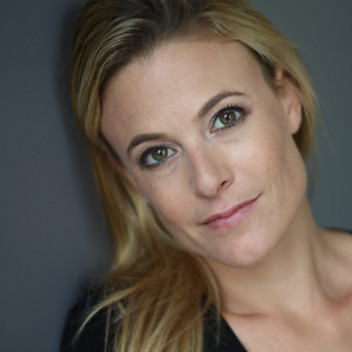
About Tali
I am a…
Brainstormer, Change agent, Educator/Teacher, Idea generator, Scientist, World traveler, Writer/Editor
Bio
Tali is a neuroscientist. She is the author of The Optimism Bias, and the director of the Affective Brain Lab at University College London. The Affective Brain Lab studies how motivation, emotion and social interaction determine our expectations of the future, our everyday decisions, our memories and our ability to learn. By understanding these basic cognitive and neural processes the Affective Brain Lab aims to identify ways to encourage behavioral change that enhance well-being. Tali’s papers on the neuroscience of optimism, emotional memories and cognitive dissonance have been published in top scientific journals including Nature, Science, Nature Neuroscience and Psychological Science. She has also written essays for the popular press which have been published in The New York Times, Observer and Time Magazine. She is a faculty member of the Department of Cognitive, Perceptual, and Brain Sciences at University College London and a Wellcome Trust Fellow. She received her Ph.D in psychology and neuroscience from New York University and a BSc in economics and psychology from Tel Aviv University. She has conducted research at the University of California, Harvard University and the Weizmann Institute for Science.
I'm passionate about
Human behavior, behavioral change, the human brain. How we make decisions, how emotion and social interaction influences those decisions, why we are optimistic, and long distance running..
An idea worth spreading
We like to think of ourselves as rational creatures. But both neuroscience and social science suggest we are more optimistic than realistic. People underestimate their chances of divorced, suffering from cancer; expect their children to be extraordinarily gifted; envision themselves achieving more than their peers.
Why would our brains be wired in this way? It is tempting to speculate that optimism was selected by evolution because, on balance, positive expectations enhance the odds of survival. Yet optimism is also irrational and can lead to unwanted outcomes. How than can we remain hopeful—benefiting from the fruits of optimism—while at the same time guarding ourselves from its pitfalls?
Knowledge is key. We are not born with an innate understanding of our biases. The brain's illusions have to be identified scientifically. Once we are made aware of our optimistic illusions, we can act to protect ourselves from its pitfalls. The good news - awareness rarely shatters the illusion
Areas of expertise
Brain / behavior, Decision making, Emotion, memory, Neuroscience, Optimism, psychology